
Canine Parvovirus: What do I need to know?
With recent cases of canine parvovirus identified in the region, now is a timely reminder for local dog owners to understand the signs, risks and steps they can take to protect their pets.
To help local pet owners stay informed, Dr. Ebony Schoenfeld BVetBiol/BVetSc (Hons) GCLTHE has provided Council with the following information, answering some of the common questions about canine parvovirus.
Canine Parvovirus: What do I need to know?
What is canine parvovirus?
Canine parvovirus—aka "parvo"—is a highly contagious, severe viral infection that primarily attacks a dog's gastrointestinal tract. The virus damages the intestines, lymphatic system and bone marrow, destroying the body's ability to fight off infections. Affected dogs typically present with frequent vomiting, severe bloody diarrhoea, lethargy, depression, reduced appetite and clinical signs of dehydration.
When is parvovirus commonly seen?
Cases can occur year-round with an estimated 20,000+ cases seen annually in Australia (Kelman et al., 2019). Vet clinics often notice spikes in canine parvovirus during the warmer summer months and throughout autumn. Puppies and unvaccinated dogs aged between 6 and 20 weeks face the highest risk.
How does it spread?
Parvovirus is highly contagious and spreads rapidly through the faecal-oral route. Dogs can become infected through direct contact with infected dog's faeces, or indirectly via contaminated soil, food bowls, shoes, and clothing. The notoriously hardy virus can survive in the environment for months or even years, resistant to standard household cleaners. Ultimately, you don't need to see another dog for your pet to become infected!
How is it treated?
There is no home cure. Parvovirus is a medical emergency requiring immediate veterinary intervention. Without treatment, mortality rates are reported to be as high as 91% (Birkbeck & Humm, 2023). Veterinary treatment involves prolonged hospitalisation for intensive supportive care, which when begun early in the disease process, ensures maximum chance of survival.
How can you prevent it?
Vaccination is the best defence against parvovirus. The standard C3 vaccination protects puppies and dogs against canine parvovirus, canine distemper virus and canine adenovirus. Completing the full vaccination schedule recommended by your veterinarian and by keeping unvaccinated pups away from public areas like dog parks until immunisations are fully effective will reduce the infection risk.
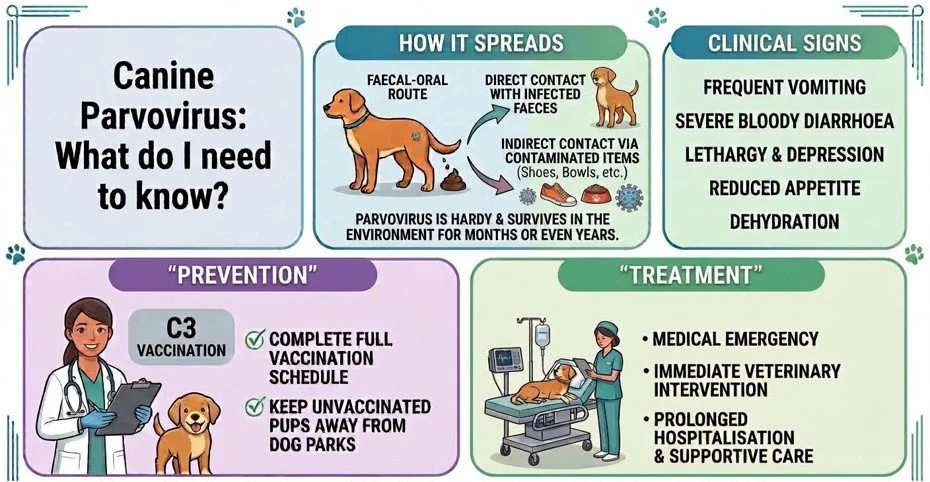
Figure 1: Key infographic overview of Canine Parvovirus. This illustrative diagram was generated using artificial intelligence (AI)
By Dr. Ebony Schoenfeld BVetBiol/BVetSc (Hons) GCLTHE, Veterinarian and Lecturer in Veterinary Technology
References
Birkbeck, R., & Humm, K. (2023). Canine parvovirus infection. In D. C. Silverstein & K. Hopper (Eds.), Small animal critical care medicine (3rd ed., pp. 544–548). Elsevier.
Cornell University College of Veterinary Medicine. (n.d.). Canine parvovirus. Baker Institute for Animal Health. https://www.vet.cornell.edu/departments-centers-and-institutes/baker-institute-animal-health/research-baker-institute/canine-parvovirus
Kelman, M., Ward, M. P., Barrs, V. R., & Norris, J. M. (2019). The geographic distribution and financial impact of canine parvovirus in Australia. Transboundary and Emerging Diseases, 66(1), 299–311. https://doi.org/10.1111/tbed.13035
RSPCA Knowledgebase. (2025). What is canine parvovirus? Royal Society for the Prevention of Cruelty to Animals. https://kb.kb.rspca.org.au/categories/companion-animals/dogs/health-issues/what-is-canine-parvovirus